
What makes a sock suitable for diabetic feet?
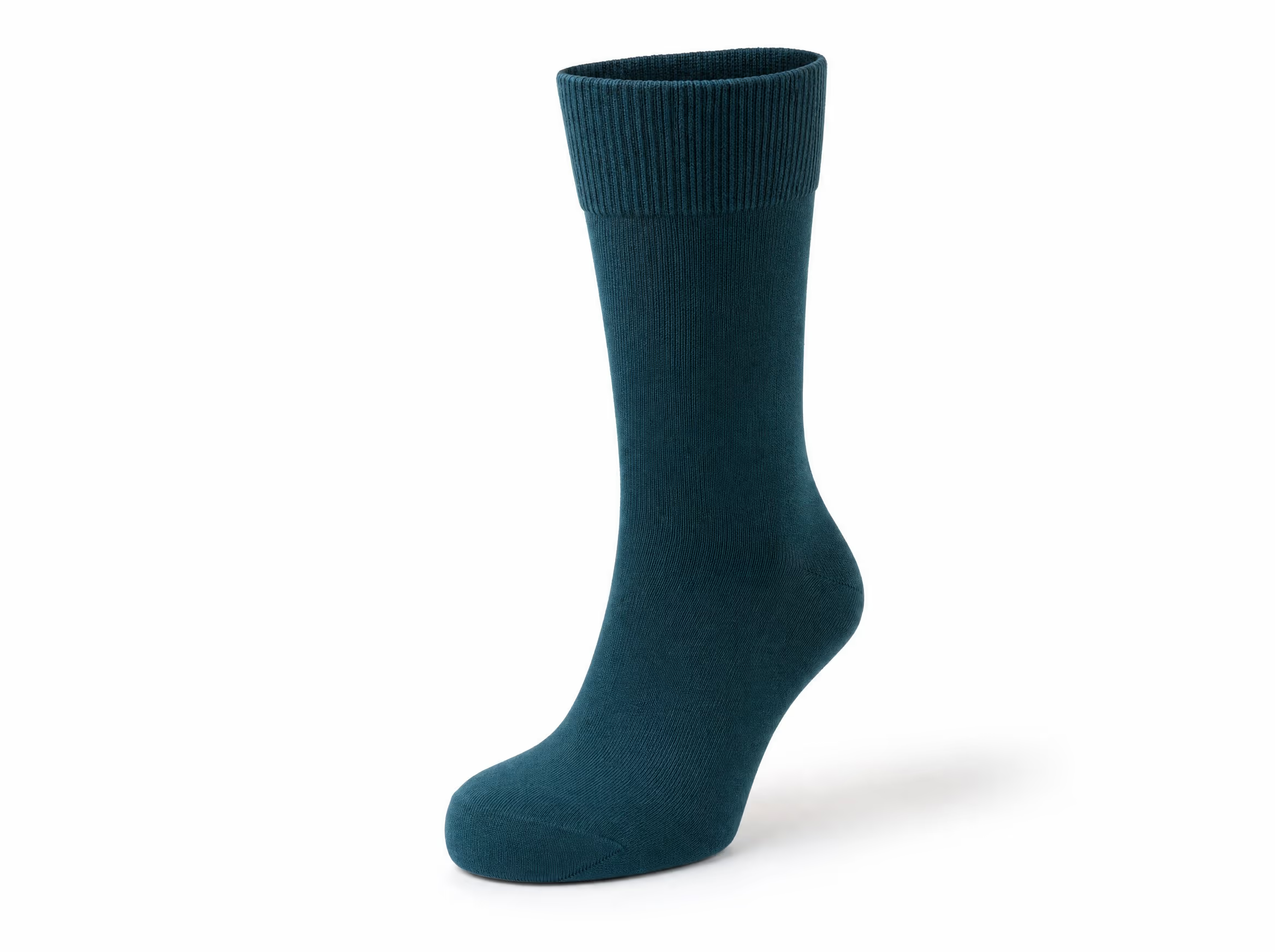
Non-binding tops and seamless toes remove the two pressure points that matter most, while soft natural yarns keep sensitive feet dry and cool.
Where most diabetic socks fail the wearer
The failure mode for a diabetic sock is rarely obvious on the spec sheet. A welt sold as “non-binding” can still leave a ring on the calf by the end of the day, and a toe sold as “seamless” can carry a ridge the wearer feels through a numb foot. For people managing neuropathy, reduced circulation, or swelling, those small pressure points are the exact thing the product exists to remove, and a pair that fails on them turns into returns and lost trust for the brand whose label is on it. Getting the construction right where the foot is most vulnerable is the whole job.
What we hold to spec on every pair
You give us the fit profile; we knit to it and verify at sampling. The points that decide whether a diabetic sock actually does its job:
- Welt: low-tension, non-binding cuff knit to a target hold, so it stays up without marking the calf
- Toe: true seamless or hand-linked closure, with no palpable ridge over the toes
- Footbed: flat-knit or smooth terry cushioning, free of abrasive underfoot seams
- Yarn: moisture-wicking combed cotton, bamboo viscose, or Modal, soft against compromised skin
- Fit: roomy, non-constrictive leg with stretch tolerance for swelling through the day
One make partner from pharmacy shelf to DTC
Whether the line sells through pharmacy and medical-supply channels, senior-care retail, or a direct-to-consumer health brand, the construction fundamentals stay the same; what changes is the colorway, the size run, and the branding. We manufacture every pair in Istanbul through our sister company Elteksan, ship into the United States on one duty-paid landed price, and scale from a first run of 2,000 pairs through repeat orders of 5,000 and up. You supply the artwork and the spec; we own the knit engineering, the yarn sourcing, and the batch-to-batch quality control. We do not provide medical certification or design services, and the claims on your packaging remain yours.
Consistency where the wearer feels it
A diabetic program lives or dies on the details the wearer cannot see but can feel: the same gentle hold at the cuff, the same flat toe, the same dry footbed, from the first carton to the tenth reorder. We build the product around that repeatability, so a brand selling into health and senior-care channels can keep standing behind every pair it ships.